Home Blog Page 6

Professor Ernest Ojukwu, SAN congratulates the successful 2017 bar final candidates

0

In his congratulatory message, Ojukwu stated that it is a rare privilege to sit and pass the final Bar Examinations.

He however cautioned the bar designates that they are coming into the legal profession at a critical time and that they should do everything possible to manage their expectations.

This Prof Ojukwu stated is because they would be meeting a bar that has not for the past many years provided young lawyers any help for the transition from academic to professional life.

They would find Ojukwu said, no canopies, no incubators, no capstones, no organized mentoring and career programmes.

Ojukwu warned that some of the new wigs may be running into some hostile legal settings.

He however advised them of the need to remain focused, strong, honest and noble, and committed to their dreams.

They should not hesitate to contact persons who genuinely provide them opportunities for mentorship and counseling as the Bar is made up of many noble persons to count on.

Ojukwu stated that there is hope as the present NBA leadership is seriously addressing fundamental and foundational reforms through a major legal framework reforms.

Prof Ojukwu enjoined the new wigs designates to be prepared to render their help and support for this transformation to a future bar that will make meaning to her members- young and old.

He wished them well and looks forward to their call day while praying for their unsuccessful colleagues’ success at the next bar examinations.

Pupilage Without Minimum Salary Is Sure Slavery For Young Lawyers By Prof Ernest Ojukwu, SAN

0

Section 86 of the Legal Profession Regulation Bill prescribes a mandatory pupilage scheme for every lawyer admitted to the Nigerian Bar from the date of the commencement of the Act. At the Lagos State Administration of Justice Conference Lagos, 2017 and the NBA Section of Business Law Conference Lagos, 2017, I strongly opined that a mandatory pupilage programme without minimum salary will convert our young lawyers to slaves. I still hold that view today.

I have reviewed the Legal Profession Regulation Bill and I find two gaps that we need to cover.

The first one is that the Bill does not create mandatory duty on the Legal Profession Council of Nigeria to prescribe minimum emolument for pupils. It is true that one of the prescribed responsibilities in the bill is that the Council shall make rules for “funding of the pupil programme”. This provision in my view is not enough to take care of the responsibility to provide minimum emoluments for the pupils. We should have a provision in the bill that clearly state that “the Council must prescribe mandatory minimum emoluments for pupils.”

I have my doubts if pupilage can be successfully implemented in Nigeria. I also question the efficacy of pupilage as a solution to our low professional standards as long as the Bar continues to show disinterest what we do with legal education at the LLB and Law School levels. I will fully address this aspect later.

But if we must have pupilage, then our pupils must be paid a fair and mandatory minimum wage. In England, where we want to copy pupilage from, the Bar Standards Board prescribes a mandatory minimum salary for pupils. The current regulatory minimum salary is £12,000 per annum.

The second gap in our proposed bill is the date of commencement of the pupilage programme. The bill says it is “from the date of commencement of this bill.” The bill should rather provide an open commencement date. It should rather state that “from the date pronounced/ prescribed/ordered by the Legal Profession Council of Nigeria….” This is the only way for such a huge venture to have the chances of serious implementation success. An open date will create the opportunity to set up the Council after the Bill is enacted into law.

The Council will then go into serious studies of what will or will not work; accredit law firms that have the requisite facilities and capacity to take pupils; write the rules and guidelines to deal with the scope of activities for the pupilage, minimum salary, treatment of pupils, complaints procedure etc. The Council would also have the time to train the first set of Pupil Supervisors, and set up the Division responsible for the pupilage programme. This would also be the time to focus on the reform of legal education especially at the foundation level- the LLB programme. Pupilage without reforming legal education at the foundation is putting something on nothing.

The best way to predict the future is to create it. – Peter Drucker

By Prof Ernest Ojukwu, SAN (Chair of the Future State of the Legal Profession Subcommittee of the LPRRC)

NBA Ikeja Branch Shows the Future Path – Prof Ernest Ojukwu SAN

0

The Tiger Branch as the members of the Nigerian Bar Association Ikeja Branch love to be called are truly tigers. But one can be as brave or as strong, or as energetic, or as powerful as a tiger without contributing any meaningful positive to society. That is why I prefer to call the Tiger Branch purposeful pathfinders, and true bar association.

At a time in our National life, when questions are being asked by lawyers and non-lawyers on what the role of lawyers and the Nigerian Bar Association is, Ikeja Branch of the NBA has shown us the way.

On May 18th 2017, the branch through its Human Rights Committee hosted a seminar on “protecting the rights of the vulnerable citizens in our society- matters arising.” The focus of this conversation was “persons with disabilities”. The Nation has failed or refused to pass a disability law. The Nigerian Bar Association does not even have any policy on the support of her members with disabilities.

On March 27th 2018, the Ikeja Branch of the NBA hosted another seminar on “salvaging Nigeria’s criminal Justice system: the Jury option.” The seminar on the “Jury option” is the first serious conversation on this criminal justice option in Nigeria. The conversation on “Jury option” “seeks to end jungle justice with the jury system, expand the frontiers of civic rights and responsibilities, and promote better Judicial practices by ensuring the active participation of the citizens in the justice delivery process…”

A wave of police harassment, molestation and brutality of lawyers in the line of duty began seriously in 2016. On 30th January 2018 Fatai Abijo, a member of the branch was beaten up and handcuffed by a task force of the State Police Command for the only reason that he remonstrated with the task force to stop an assault on a motorist whose offence were unknown. Two objectives of the NBA declare that the Association shall maintain and defend the integrity and independence of the Bar, and the “promotion and protection of the principles of the rule of law and respect for enforcement of fundamental rights, human rights and people’s rights.”

With a genuine leadership interested in the objectives of the Association and the protection of its members (and the public) from police brutality of citizens, NBA Ikeja Branch decided to carry out a protest march on the streets in February 2018. The State Commissioner of Police negotiated with the Branch for the Bar to shelve the protest march. The result of shelving the march was that the Commissioner of Police with his Area commanders and many senior police officers participated in a joint press conference with NBA Ikeja Branch at the Bar centre of the Branch. The press conference addressed concerns on police brutality and the citizen. In addition, the Commissioner of Police organised a workshop for Lagos State Divisional Police Officers on “Human Rights and Police in a Democracy.”

ALSO READ   NBA Calls for Nominate for ‘Gani Fawehinmi Signature Prize’

On March 13th 2018, the NBA Ikeja Branch members undertook a street march to protest over 400% hike in land use charges and other taxes by the Lagos State Government. This protest march was conducted despite the threat of arrests on the Chairman and leadership of the branch. Some civil and human rights groups joined the Nigerian Bar Association Ikeja Branch on this protest. The Branch also submitted a petition to the State Government on this tax protest. It has been reported that the Government is discussing a downward review of the charges.

There are some other Nigerian Bar Association branches and branch leadership that are taking steps to address the objectives and the future of the legal profession. But Ikeja branch is at present our pathfinder. We thank the branch Chairman Adesina Ogunlana, the branch Human Rights Committee and other leaders and members of NBA Ikeja Branch for showing the way. To predict the future we must create it.

Letter to Lawyers at Easter By Prof Ernest Ojukwu SAN

0

As the season of Easter 2018 starts I extend the season’s best wishes of peace, renewal and hope to all lawyers.

The nation is in growing turmoil- facing insecurity, challenges of corruption, rule of law, democracy, justice, equality, tolerance, and economic welfare.

As part of the nation, lawyers and the legal profession face these turmoils too. While we can easily accuse the system and Institutions for these failures, yet the reality is that what failed first is the character and ethical principles in human agents.

Today, humanity and Nigerians are ashamed of our inability to turn the tide of unethical practices spreading like cancer, and our inability to defend human life, protect human dignity and promote the welfare of all.

At this time of our history, the burden of leading a new positive conversation lies on lawyers and the legal profession.

I urge us all to use the Easter season to reflect on our actions, responsibilities and values.

Join the conversation and set a new bar for the legal profession and our Nation.
PROF ERNEST OJUKWU SAN

Lack of convictions doesn’t mean judiciary is corruption-free – Ojukwu

Prof. Ernest Ojukwu, a Senior Advocate of Nigeria, is the immediate past Deputy Director General and Head of Campus, Nigerian Law School, Enugu. In this interview with OLADIMEJI RAMON, he argues that education is a more potent weapon against corruption than prosecution

A recent survey you conducted suggested that bribery of judges or corruption is the biggest problem of the judiciary; yet a few judges have been taken to court and some have been exonerated. Will you still say corruption is a reality in the judiciary?

Prosecution is not the evidence of the existence of corruption, and it is also not the evidence of a serious programme for the eradication of corruption; prosecution is the last and the least process of an anti-corruption war. In fact, if you graduate anti-corruption war, prosecution will take less than 10 per cent. And unless a regime or leadership understands that focus, it will never seriously fight corruption, because prosecution, sanction accounts for only about 10 per cent of the anti-corruption fight.

An anti-corruption programme is in education, orientation; that’s where 90 per cent of the job is. The Nigerian Bar Association is not leading in that. There is a five-year university programme but there’s no course on ethics in most universities. Meanwhile, our graduates learn what they do from the university; everything we do now as practitioners is learnt from the university – shunting, bribery and corruption, bribing of teachers, molestation of students by teachers, using money to campaign for election into the students representative council, is all there and it is growing in trend. So, we are training Nigerians from the university to become Nigerians. Unless we redesign our programme, we can’t handle it.

We must set the rules and enforce them. And then, there is a need for publicity on actions taken on anti-corruption; the more people learn, the more they are deterred and vice versa. Public disgrace is one major area. Discussion is another. In those days when I was the chairman of the Bar at Aba, we had magistrates who were accused of one or two acts of corruption; we’d take one or two lawyers and pay a courtesy visit to the magistrates and in the course of discussion we would confront the magistrates with the allegations. This person said they gave you so-so amount of money; I can assure you, one or two of the magistrates have become judges and I know the change of attitude. They may not be 100 per cent clean, but it affected them positively. Just a discussion. This we don’t do at the Bar. What we do is that someone writes a petition, and in some cases the petitions against lawyers and judges don’t see the light of the day, no discussion with the person who has been accused, and no serious or active ethics workshops for many years.

The Bar itself voted bribery of judges as their number one problem; they were not voting against judges, they were voting against lawyers who bribe judges. Judges were not the focus but the bribing of judges by lawyers. So, it is an inside problem.

Is there any hope that the Nigerian Law School might reconsider its decision on the admission of Law graduates from the National Open University of Nigeria?

Those who go to Open University to read Law know that they have no right to go to law school; Nigerians generally know the right thing, but there is a belief that at some point, things will change. The system is not transparent, so, nobody can say, exactly, what the result will be. We are misled by our own growing way of life that rules and regulations would not be obeyed or enforced.

However, there is nothing conclusive to say that if you study through the Open University, you can’t be a lawyer. Based on my experience as a Law teacher in the university for 15 years, and nearly 15 years as a teacher in the Nigerian Law School, I know, as a fact, that if we continue training our students on a traditional syllabus and traditional methodology, as we are doing, Open University is as good as any other LLB. You don’t need students to be in your class to pass exams, because that’s my experience. And when I was a young teacher I never insisted on students taking attendance. They were always enforcing attendance but I refused to enforce attendance because I refused to teach traditionally. If you engage students they would attend your classes but if you teach traditionally they would only attend out of compulsion. To that extent, Law students in Open University are not worse trained than those under our LLB programme.

But there is a policy problem. We had part-time legal education at some point in our universities and experience showed that some graduates did not actually take part in the training but had degrees. There is also the policy problem facing every profession relating to numbers. You must have heard from the current President of the Bar when he was inaugurating the Legal Profession Regulating Committee in January 2017 relating to admitting more lawyers than we can accommodate. That’s a policy problem. If the professional body feels that we have too many lawyers, they will do everything to tighten it up. Already, we are quarreling with the number coming from the full-time programme, so why open another floodgate?
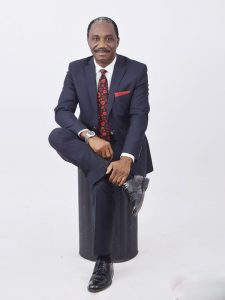
Prof Ernest Ojukwu SAn

If the Nigerian Law School continues to be run the way it is, then we can’t have more admissions, because there will be no place to manage the students. But if you change the tenor of the law school, as I have proposed many times before, where you deregulate the law school and allow private service providers, then you can admit more. In that situation there would be a central body that sets the curriculum, teaching method and the examination for all.

A situation where the Nigerian Law School houses students beyond its capacity and sets the examination for the same students itself creates pressure for the law school. The law school and any school in the country that has that kind of tenor will run into a pressure problem. But if you extract the examination from the law school and hand it over to an external body – the Council of Legal Education just like JAMB – there will be less pressure. Nobody pressures JAMB, but if your school sets the exam by itself, they pressure you. It is until that happens that we can allow anybody to read Law from anywhere and face the exams; train yourself and face the exams. And by that time you can still keep the policy of the profession, with low number, yet giving everybody an opportunity.

Despite being in the academics, you are also an active member of the Bar. The NBA is returning to the polls this year to choose a new set of leaders. How can the electronic voting system introduced two years ago be strengthened?

The world over, electronic voting is still a challenge and that’s why many nations have not moved to full-blown electronic voting; it is still a work in progress. One of the things that we need is a transparent or open system that people will understand primarily; that’s the first thing. There should be some form of demonstration on how what we want to deploy will work, some form of public demonstration.  Secondly is that the system must technically give us the result in real time. One minute after the close of voting we should know the results, not one hour; because it is straightforward. If you are in a class and you are voting electronically, you should see the result immediately. If it’s timed for five minutes, after five minutes it stops and the result shows. We’ve seen electronic voting in the American Senate, once they start clicking, if it’s 10 minutes, after 10 minutes they stop and the result shows. That’s what we need, real time totaling of results.

Money has become a prominent feature of the NBA elections in the recent pass. Is there likely to be any difference this year?

I don’t know. You should ask the Bar, not me.

There is a committee set up by the NBA to look at the welfare of lawyers; among other things, the committee is proposing a minimum wage of N50,000 for young lawyers. Do you think that is enough?

The minimum wage is not for young lawyers; it is for all lawyers but the younger ones benefit more because they form the bulk of the employees. I will not like to comment on the exact amount of minimum wage because I will like this to be a decision of the Bar but people like me support to the highest level a prescription and an enforcement of a minimum wage for lawyers but the actual amount, we should discuss it and agree.

In what more ways can the NBA respond to the needs of lawyers?

First, the NBA should embark on a robust capacity building for lawyers; continuing legal education programme for lawyers, that’s a major vehicle to create a relationship with the Bar. Every professional body in the world, 80 per cent of their work is capacity building. Very few lawyers, for example, have an idea about Bitcoin. Meanwhile, it is a money-making venture; even carpenters are doing it now. The Bar should run workshops on it. The Central Bank of Nigeria recently said they are not going to make rules for Bitcoin because they are still studying the field. This is where the Bar should take leadership; run a workshop on it, look at what is happening in other countries, agree on whether or not we should have rules; if we agree, produce a rule and send it to the Central Bank, this is the job of the Bar. If you have something like that, lawyers will be interested as it primarily opens job spaces for lawyers; and, of course, welfare.

Apart from insurance for death, we should have insurance for health. If you have that, people will want to belong to the Bar because health care is expensive.

Talk about young lawyers; between 5,000 and 7,000 lawyers are graduated from the law school every year; the only obligation the Bar has is to push them to the Supreme Court to go and enrol, after that they disappear into the cloud. There’s no induction for them, there’s no transition programme, there’s no incubator, no canopy, no discussion about them, no career planning and counseling programme, not one single seminar. And so, they just push 7,000 people out there. If we have these activities people would yearn to belong.

There is no single competition run by the Bar for the growth of law faculties and development of law students in the country. In other places, the Bar runs such competitions in several aspects of Law. By the time Law students are leaving the law faculty in many parts of the world, they already found a career path, because it is through those platforms that students are mentored into careers and people come out of the university knowing already where they are going to.

There are hundreds of activities that the NBA can embark upon that will attract donors. Access to justice, human rights are open areas. What about our ethics; are there are any discussions? Meanwhile, if you ask 50 lawyers what the major challenge of the profession is, they will say ethics, corruption, but the Bar has not run active workshop on ethnics for many years.

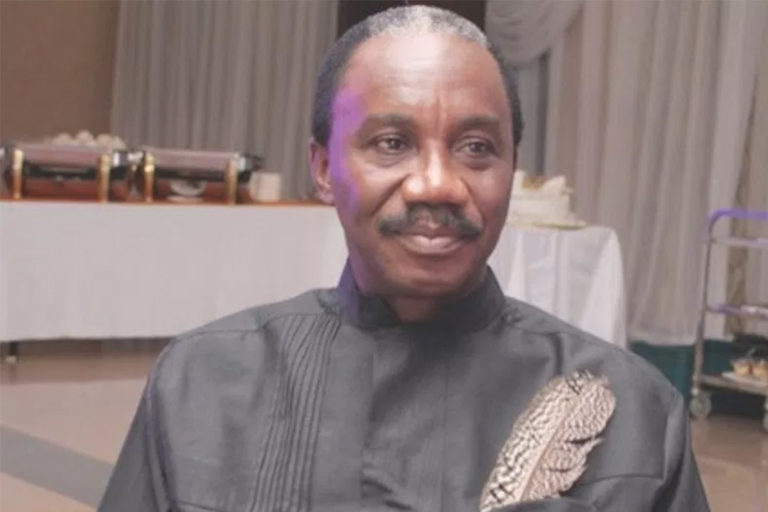
Prof. Ernest Ojukwu Frowns At Police Invasion Of NBA Secretariat, Ikeja, Asks NPF To Respect Human Rights

0

Foremost Law Teacher, eminent Bar man and Senior Advocate of Nigeria, Prof Ernest Ojukwu, SAN has noted with serious misgivings the recent threat credited to the Lagos State Police Command to arrest and prosecute members of the Nigerian Bar Association, particularly the officials and members of the Ikeja Branch of the Association over the planned peaceful protest during the occasion of the visit of President Muhammadu Buhari to Lagos State today.

“The Nigerian Constitution is founded on the rule of law, the primary meaning of which is that everything must be done in accordance with the law. It means also that government should be conducted within the framework of recognized rules and principles which restrict discretionary powers.” These were the immortal words rendered by the Supreme Court in the words of Obaseki JSC over three decades ago, in the evergreen case of Military Governor of Lagos State vs. Odumegwu Ojukwu.

As the rank and file of the Nigerian Police know or reasonably ought to know, the rights to freedom of expression, the rights to peaceful assembly and association including the rights peaceful protests are part of the fundamental rights of all Nigerian citizens, including members of the legal profession and these rights are recognized and enshrined under Chapter IV of the Constitution of the Federal Republic of Nigeria 1999, the African Charter on Human and Peoples’ Rights and the Universal Declaration of Human Rights. Furthermore, the scheduling of protests to coincide with high publicity events such as presidential visits is a well-known technique available and respected the world over. The employment of words such as “dire consequences” or “arrest and prosecution” to threaten citizens is therefore an unfortunate throwback to long gone days of military juntas.

Professor Ojukwu therefore counsels the Nigerian Police not to embark on any actions that will reflect negatively on the rule of law mantra of the Buhari administration and paint the country in negative light. The officials and members of the Nigerian Bar Association and the general public are also encouraged to express themselves peacefully and not to engage in any conduct that will endanger the peace.

Response Of Nigerian Lawyers On Top Ethical Issues They Want Tackled In The Legal Profession By Prof Ernest Ojukwu, SAN

1

This is a Report of a Survey carried out in 2017 by Professor Ernest Ojukwu, SAN, among a cross section of Nigerian Lawyers, on the top ethical issues which they want to be tackled in the legal profession, in order to achieve improvements in the profession.

Introduction
For more than ten years, I was deeply involved in the drafting of the Rules of Professional Conduct for legal practitioners and the conduct of many sensitization workshops on the Rules under the Institute of Continuing Legal Education and other ethics workshops under the auspices of the NBA Academic Forum and NBA Branch programmes. At these programmes lawyers complained of and listed many ethical challenges facing the legal profession. I also over these years collated many examples of indiscipline and ethical challenges at the Bar as stated by practitioners, public servants and members of the public which are all in the public domain such as the newspapers and on the internet. There have been calls for the legal profession especially the Bar to look inwards and tackle/stem the tide of indiscipline and unethical conduct among its members.

See for example the Nation’s (Newspaper) report of December 18, 2012 that NBA restates commitment to anti-corruption war (http://thenationonlineng.net/nba-restates-commitment-to-anti-corruption-war/) at the December 9, 2012 workshop- the International Anti-Corruption Day on the theme “Act against corruption today” organized by the Nigerian Bar Association at the Rockview Hotel, Abuja to mark the day. Excerpts of contributions at the mini conference are shown below:

Okey Wali, SAN (President NBA) :
Members of the Bar have a seminal role in this new initiative and should not subvert justice by prolonging trials through frustrating applications, including adjournments. The NBA calls on its members to promote professionalism, by shunning sharp practices in the interest of their client, against the society, as part of their contribution to the crusade against corruption.

YUSUF ALI (SAN) said:
“This is a day that represents a shift from what it used to be with us. It represents a day that shows that the NBA is ready and willing to give the battle against corruption its all. The NBA is also showing a signal that corruption in any strata of the Nigerian society is not going to be tolerated, whether it is among the profession itself, its staff and the generality of Nigerians”.

Ali (SAN) said:

“From the tone of the speech of our president, and the little comment that I made on that day, it is now clear that there is unanimity among NBA members even among our members who commented to start from within. We must ensure that lawyers themselves are corruption free”.

“The battle against corruption has started and we are starting from among ourselves. So, any lawyer who believes that corruption is the only way he could make it, should have a rethink and may be, join another profession”.

Chief Joe-Kyari Gadzama SAN said:
“Well, it is a good thing that the NBA has equally keyed into the scheme of things using this platform to talk about corruption and fighting corruption. It is indeed a very good beginning, because we have had a kind of self appraisal, a kind of soul searching and we are being self critical”.

“ I believe that this is a good starting point, but we have to go beyond this to make sure that we fight it, not just from the lips, but from the bottom of our hearts and show 3
leadership by example. Those of us that are found to be corrupt, whether they are lawyers or judges should be seen to be punished and it is only then that the public would have confidence and faith in us as lawyers”.

“If lawyers and the legal profession do not fight corruption, then no other agency, or organ of the government or group of persons would fight corruption more than the lawyers because of the nature of our profession, the nature of our training, our experience and exposure. So, I think that the starting point is the lawyers and the judges because the complaint is everywhere, the searchlight has been in our courts against lawyers but lawyers should be seen to be living above board. This will be major plus for Nigeria as a country”.

Dr. Garba Tetengi (SAN) said:
“ I am optimistic, I believe that we all know the problems, so we should begin to look at how we can deal with this cankerworm”
“Well as the chairman has said and I associate myself with it there is a need to look inwards, possible organise a workshop or colloquium in order to sit down and address these problems at the very local level and see how we can make progress. Corruption is an endemic concept, it begins from the house. In fact, it is the culture of impunity that has been inculcated from time, therefore there is a need for us to fight it from all angles”.

M.U. Ibrahim (Jam-Jam):
“We can get rid of corruption by the NBA being very strict on our members, by seriously dealing those found to be corrupt among us, whoever is found wanting should be dealt with, there are no two ways about it.”

At a similar workshop organized by the Nigerian Bar Association, in collaboration with the Presidential Advisory Committee against Corruption (PACC) in Abuja in July 2016, the Chief Justice of Nigeria Justice Mahmud Mohammed through Justice Kudirat Kekere-Ekun was reported to have urged members of the bar to examine themselves, with a view to developing workable ways to curb corruption and charged them to look inward as individuals in the system, and collectively as a body, to improve the legal system. “You have a role to play as an individual and it is when we all change our attitudes that we can see it reflect in the society. “No doubt, the legal profession is crucial in the maintenance of a high quality of justice delivery within the justice system and such success or failure of our fight against corruption will depend on our willingness to take the right ethical path,” the chief justice was quoted as saying. According to the statement, the theme of the workshop was “Anti-Corruption, Ethics of the Legal Profession and Justice Sector”.

Statement of the Problem
The purpose of this study was to determine the response of lawyers to tackling ethical challenges within the profession in order of priority.

Significance of the Study
Everyone whether lawyer or non lawyer will benefit from this study. First the study has given lawyers an opportunity to give a voice to their concerns as it relates to ethical challenges within the legal 4 profession. This in turn gives the legal profession and its leadership a tool to work with at deploying its resources towards tackling the ethical challenges. The study also creates openness and transparency which in turn builds trust among members and consumers of legal services if the Bar sincerely begins to work to tackle the ethical challenges. People/Organisations will be ready to assist the legal profession begin to solve the problems.

Scope of the Study
This study was limited to the perceptions of lawyers from all sectors and from all geographical zones.

Method of Study
Data for this study were collected using a survey form developed by the reporter. The list of ethical issues listed in the survey form was based on the experience and research of the reporter. See “Introduction” above. The survey form had a list of 45 ethical challenges and issues and each respondent was asked to tick only five ethical issues they wished the bar to tackle immediately. The survey forms were administered face to face at lawyers meetings and conferences across the country between May and October 2017. The Bar meetings where the survey forms were distributed were: Afikpo Bar Meeting, FIDA conference Port Harcourt, Young Lawyers group Uyo, Bar meeting Enugu, Bar Abakiliki, and at the Annual Conference of the NBA Lagos. One thousand forms were given out but only 578 were returned.

Limitations of the Study
This study may be limited through the use of survey form as a data collection instrument. Main reason being that the list of ethical challenges on the form was based on the reporters own experience and research. Some of the issues listed may also be similar to each other.

Findings and Conclusion
The findings have been aggregated in the table below. Respondents indicated that the top 5 ethical issues or challenges they want tackled by the bar/legal profession are:

1. Bribery of Judges
2. Delay tactics in court/using litigation as an instrument of delay/delayed trials/file frivolous applications to delay trials or executions or proceedings
3. Bribery of court personnel for processes
4. Lawyers’ active role in disobeying court orders/blocking enforcement of orders and judgments
5. Rudeness to other colleagues/Impolite attitude

See Table below.

Prof Ernest Ojukwu, SAN
23RD January 2017

Prof Ernest Ojukwu Writes Sen. David Umaru, Urges Him To Suspend Public Hearing On “Legal Practitioners Act (Amend) Bill 2017 Says Some Provisions Are Outdated

Erudite professor of Law, Ernest Ojukwu SAN has categorically commented on the proposed Public Hearing on the Legal Practitioners Act (Amend) Bill 2017 ( SB. 435).

Restating the fact that he drafted the bill 12 years ago, he believes that many provisions of the Bill are outdated and in urgent need of overhauling.

He therefore calls for the immediate withdrawal of the Bill before the Law making house.

Below reads copy of the letter

10th March 2018

CHAIRMAN

SENATE COMMITTEE ON JUDICIARY

HUMAN RIGHTS & LEGAL MATTERS

ROOM 204 2ND FLOOR

SENATE WING

NATIONAL ASSEMBLY

Dear Distinguished Chairman,

RE MEMORANDUM – PUBLIC HEARING ON LEGAL PRACTITIONERS ACT (AMEND) BILL 2017 (SB.435) 

My attention has been drawn to the proposed public hearing on the “Legal Practitioners Act (Amend) Bill 2017 (SB.435) and call for memoranda.

I drafted that bill 12 years ago for the Nigerian Bar Association under the oversight of the NBA President Olisa Agbakoba SAN and General Secretary Rabana-Lawal SAN. President Agbakoba had sent that bill to the National Assembly in 2007 under the private sponsorship of Senator Ndoma Egba SAN, Senator Ike Ekweremadu and three other Senators.

The bill was proposed as a result of the failure of the Bar to “push” for the enactment of a totally new Act “The Legal Practitioners Act (Bill) of 2004” which was approved by the Bar towards the end of the tenure of NBA President Chief Wole Olanipekun SAN in 2004. While the 2004 Bill was intended to be a total replacement of the Legal Practitioners Act, the Amendment Bill of 2007 only dealt with specific challenges such as discipline of lawyers, mandatory continuing legal education, statutory backing for NBA and its institute as a corporate body, and so on.

While we must be grateful to His Excellency Senator Akpabio for re-sponsoring this Amendment Bill, we should also urge him to stay further action on the Bill for the following reasons:

(1)   The Amendment Bill was drafted in 2007 and some of its sections are out-dated and unnecessary now;

(2) Some of the out-dated provisions include: giving NBA a statutory backing, giving the Institute of Continuing Legal Education a statutory backing, domiciling the continuing legal education programme with the NBA, writing detailed rules of a mandatory continuing legal education into the law, giving NBA additional regulatory functions when the current move is to divest the Association of all regulatory functions; and bringing more persons into NBA control when it has been unable to and lacks the capacity to manage the scope of persons under its control at present; 

(3) The current legal profession’s regulatory objective is to concede only a representative role to the Bar Association; 

(4) The Bar has produced a more advanced draft law- titled the “Legal Profession Regulation Act” which hopefully would be sent to you as soon as possible.

(5) The proposed Legal Profession Regulation Act covers the field and is more likely to address most of the legal profession’s problems today (2018).

 I do note that the LPA Amendment Bill has very good provisions that will still need to be included in the proposed Legal Profession Regulation Act, such as the provision on multi-disciplinary committees for lawyers.

Senator Akpabio should be persuaded to withdraw the bill and probably work together with the Bar to push a new holistic Bill. Though it is unfortunate that the Bar has not been able to “push” for the renewal of its foundation legislation since 2004 when we submitted the first reformed Bill, it would be better to get it right now, once and for all times. I therefore suggest that you use your good offices to suspend further deliberations on the proposed Legal Practitioners (Amend) Bill 2017.

I thank you for your responsible leadership.

Prof Ernest Ojukwu, SAN

Chief Solanke SAN: Pupilage- Lawyers are not slaves

0

Chief Folake Solanke, SAN has decried the treatment of young lawyers by some of their employer- law firms and declared that “Lawyers are not slaves!” She stated this in her chairman’s opening remarks at the milestone celebrations of Dele Adesina, SAN on 22nd February 2018 at the Muson Centre Lagos. According to her she received reports from young lawyers in Ibadan and at the 2017 NBA conference in Lagos complaining that they were not being paid for their work while undergoing pupilage.

In her remarks Mrs. Solanke stated that “this is wrong for lawyers traditionally are not expected to render service without remuneration; … lawyers are paid by their clients so lawyers in pupilage should be paid. New lawyers incur expenses during pupilage to wit: for rent, food, transportation, books, apparel, etc. In defence of lawyers in pupilage I declare that lawyers are not slaves. Only slaves work for no pay or very poor pay… A lawyer is certainly not the property of a learned senior or any other person. When I was in pupilage I was paid… Thus, I employ all senior members who utilize the services of lawyers in pupilage to pay them adequately. Lawyers are not like the African illegal immigrants who are currently being sold into slavery in Libya in this 21st Century.”

From her statements Chief Solanke was referring to pupilage in a general meaning of employment of fresh lawyers in the Country.

It would be recalled that in press statements and presentations in the past I had argued that the profession must prescribe and enforce minimum wage for lawyers and that “pupilage without minimum salary is sure slavery for young lawyers”. The proposed Legal Profession Regulation Act prescribed two years mandatory pupilage but does not prescribe imposition of mandatory minimum wage. In England under the pupilage programme there is a prescribed mandatory minimum wage of 1000 British Pounds.

FG is right on sale of ‘wasteful national assets’ – Ernest Ojukwu, SAN

1

Ernest Ojukwu, a senior advocate, has been in practice of law for over three decades. Ojukwu, as a law teacher for 32 years, professional instructor on continuing legal education for the bar and a legal practitioner has impacted greatly on the development of law and justice delivery system. In this interview, he spoke on legal education in Nigeria, roles of the senior members of the Bar in sanitizing the legal system and the planned sale of public assets. Excerpts:

You were a Deputy Director-General of the Nigerian Law School and head of the Augustine Nnamani Campus, Enugu for some years. What was the experience like? 

I was head of the Law School Campus for 12 years. And I was the pioneer head. So I started working at the Law School without a single chair or table on 12th February 2001. The first meeting with my staff was held on the balcony of a building without a single chair or table. My first desk top computer for the Campus was a donation by Chief O.C.J. Okocha, SAN, the then President Nigerian Bar Association, NBA. The Campus was over grown with weeds and snakes and scorpions were in charge. The school was not fenced round. We didn’t have culverts for channeling water. The roofs of most buildings leaked water. We had little or nothing to run a law school. It was a very difficult and challenging time but my first set of students treated me as a brother and partner and we all went through difficult times together. They were quite understanding and cooperative. When we stabilized many years later, my focus shifted to my original single mission- change, what and how we taught at the Nigerian Law School. The then Director-General, Prof Tahir Mamman, SAN gave me the free hand and support to lead the academic change at the Nigerian Law School from 2006. It was very exciting for me to witness the adoption of the first ever Nigerian Law School Curriculum in 2008 and the beginning of outcomes based on interactive and experiential learning.

With your experiences at the Law School, do you share the belief and argument that the standard among lawyers has gone down?  

My view here is based on my combined experience as a law teacher for 32 years- University, Law School and Professional Continuing Legal Education for the bar and as a legal practitioner. There is a major challenge to the educational standard, professionalism, competence and values at the Bar today.

Law students of Open University of Nigeria have been denied enrollment into the Nigerian Law School by the Council of Legal Education. Is the denial justified?

A couple of years ago the Council of Legal Education decided that it will not admit graduates of Open Universities, part time and online programmes. So the Nigerian Law School must be acting under the authority of the decision of the Council of Legal Education. The Council is made up of the Heads of Law Faculties, Attorneys-General of States, representatives of the Attorney-General of the Federation and Representatives of the Nigerian Bar Association including the President and Secretary.

The reasons notwithstanding, in England where we copied our legal system and jurisprudence from, people still read law part-time and most of those trying to shut Open University law graduates out of   the Law School today benefited from such liberal Law School policies of other developed countries. Why does it appear we like making things difficult for our people?

I do not think that the Council set out to make things difficult for anybody. Check the history of legal education in the United Kingdom; it did not start accepting everything in one swoop. Things evolved as they developed and understood how to maintain their standards. There is a major challenge with our full-time legal education programmes on adequate staffing, quality staffing, ethical issues and malpractices, teaching methodology including the use of students-centered learning and experiential education. If these foundational problems are what we are still grappling with in our full-time programmes, what do you think will be happening with distant education? Law is not under subscribed. It is actually over-subscribed in Nigeria. So we do not need any affirmative lower quality programmes of action to make up. There are 55 approved full-time law faculties that will soon be producing a total of about 10,000 lawyers per annum. Why don’t they have Medicine, Civil Engineering, and airplane flying in the Open University?

Law studies in England and other developed societies are between two and four years, though in the United States, it’s a post graduate study, but in Nigeria, it was increased to five years.    What is the rationale considering the delay in our university system due to incessant strikes? 

The five year-programme was introduced in 1990 to prepare our students more adequately for the rigors of the profession. It was also a decision to marry the demand for law to be a post graduate programme and the demand that our law graduates get more matured within the training period. Right now the average age of first year law students in Nigeria is 15-17 years. The only problem I have with the length of the LLB is that at present we are wasting that time. The LLB programme is not generally being delivered in a way to effectively build skilled and competent lawyers who are conscious of social justice and ethical values. The curriculum and teaching methodology is still in the main traditional and hollow. So the five years is not achieving its purpose. Our lawyers called to the bar on day one can hardly stand and walk.

As a senior member of the Bar, how do you think the Nigerian  judiciary can be truly made independent?

Allow the Judiciary manage its own funds at all levels. But to do this, we need to agree with the Judiciary on our definition of independent management of finances. We must agree on ground rules and application of open and transparent accountability and fiscal responsibility. We must agree on what should or should not be financial frivolities like the many frivolous retreats and training programmes some of our Judiciaries embark on abroad. We need to find a way to deal with the malpractice of appointing the wrong persons as judges. We need to pay Judges very well not the peanuts they presently receive. We need to change the present massive corrupt culture pervading the entire segments of the judiciary support staff and personnel.

Will you say the Legal Practitioners’ Disciplinary Committee, LPDC, is doing enough to sanitise the Bar, considering the numbers of senior advocates answering criminal charges in court?

It must surely be doing enough within its capacity. It is not the job of the LPDC to bring offenders before it. The LPDC by the traditions we have established just have to wait until a petition is brought before it. It does not investigate or charge. So its work is limited to cases brought by the Bar before it. And the LPDC is only one panel that sits at Abuja for the whole country. So it cannot do much. This is why some of us proposed many years ago an amendment to the Legal Practitioners Act to make it possible for many LPDC’s to be set up at the same time and for the establishment of a Legal Services Commission. If nobody sends a petition to the LPDC and if the leadership of the Bar does not frame a charge before the LPDC, the LPDC cannot do anything against any lawyer no matter how grave his conduct may be. With a Legal Services Commission, the Commission is empowered to investigate/report/prosecute disciplinary cases whether or not a formal petition or complaint has been made. This is how other jurisdictions have been able to stem the tide of indiscipline, corruption and unethical conduct by the legal profession. If you pick up the Nigerian Law Reports for example, you will see litany of cases where lawyers were indicted by courts and because no person formally took those matters up in petitions to the Disciplinary Committee, those cases have remained un-investigated till date.

The Federal government hinted of its plan to sell some national assets to fund the 2018 budget.   What is your reaction to this and what does it portend for the country?

I have no problem with the sale of some national assets as long as the process is open and transparent. There are many so-called national assets that actually need to be sold like, the National Stadium at Lagos, and the National Theater at Iganmu. These are wasteful and shameful national assets.